
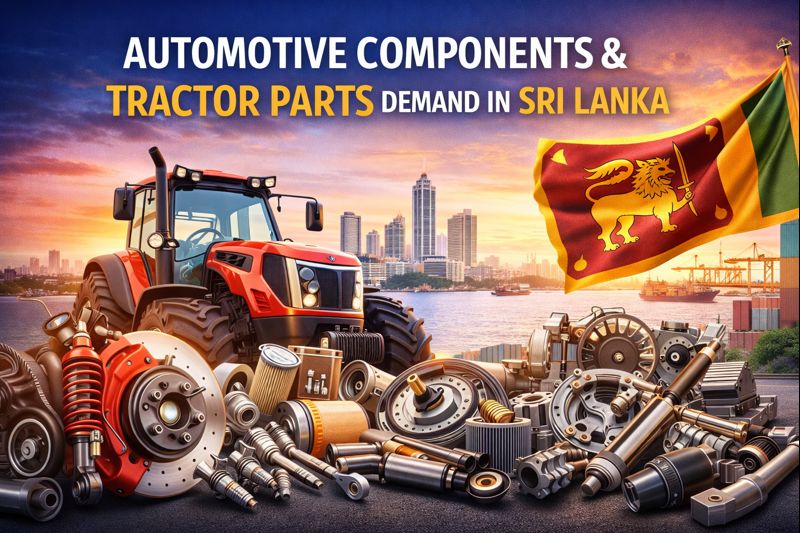
Automotive Components & Tractor Parts Demand in Sri Lanka — Market Overview and Top Importers
Sri Lanka’s automotive and agricultural-machinery sectors are recovering and evolving — creating growing opportunities for exporters of automotive components and tractor parts. This article explains current demand drivers, which product categories are most sought after, the major importers and distributors to approach, and practical entry tips for exporters and entrepreneurs targeting the Sri Lankan market.
Market snapshot — why demand is rising now
- Economic recovery and lifted import curbs. Sri Lanka’s economy showed recovery in 2024–2025 after earlier import restrictions were relaxed, which has reopened the market to vehicle and parts imports. Several government reports and parliamentary reviews note removal of many import restrictions during 2024, helping trade flows restart.
- Vehicle import volumes and tax revenues increased after reopening. After automotive import controls eased, customs revenue from vehicle imports rose sharply — indicating renewed demand for vehicles and replacement parts.
- Structural growth in the auto-parts market. Market research firms project steady growth in Sri Lanka’s auto-parts and accessories market as vehicle ownership and replacement-part demand recover. This includes demand for engine components, electrical/electronic parts, body & chassis components, and accessories.
Which product categories are in demand?
- Aftermarket replacement parts — brake systems, filters, bearings, suspension components, gaskets, hoses. Demand is steady because used imported vehicles need regular maintenance.
- Electrical & electronic components — alternators, starters, sensors, ECU modules — driven by a rise in newer vehicles and growing interest in EV/hybrid technologies.
- Transmission & driveline parts — clutches, gearboxes, axles — for commercial and passenger vehicle fleets.
- Tractor & agricultural-machinery parts — engine spares, hydraulic components, PTOs, filters, tyres — supported by investments in mechanized agriculture and demand from plantation and smallholder farmers.
- Consumables & accessories — batteries, tyres, lighting, lubricants, filters — quick-moving items with strong recurring demand.
Top importers / distributors & channel partners to target
Below are Sri Lankan companies and channels that consistently feature in trade data and industry listings for automotive and tractor parts:
- DIMO (Diesel & Motor Engineering PLC) — one of the largest vehicle and machinery importers and distributors in Sri Lanka; strong presence in passenger/commercial vehicles, tractors, and aftermarket services. DIMO is a key channel for manufacturers and exporters seeking formal distribution.
- Major tractor & agri-machinery importers / distributors — companies such as DIMO Agri, Dave Tractors & Combines (Pvt) Ltd and others that represent brands (e.g., Mahindra, Claas, LOVOL) and supply parts and service networks across the island. These firms are primary buyers of OEM/replacement tractor parts.
- Specialist parts importers & distributors — a longer tail of local players listed in trade directories and import databases (examples include New Kugan Motors, Seedevi Importers, Samarasiri Auto Parts, Lanka Fuji, and many smaller distributors). Trade-data platforms and import-export directories index dozens of active importers for both tractor parts and general auto parts. Exporters should consult these databases for lead generation.
- Aftermarket retailers & e-retailers — local online parts platforms and retail chains (e.g., New PG Enterprises and other e-parts retailers) are growing channels for smaller, high-velocity SKUs and accessories.
Practical export opportunities & where margins are best
- OEM and semi-OEM parts (medium ticket): Supply to distributors and authorized service networks (e.g., DIMO, regional tractor dealers). These orders are larger but require compliance, warranties, and often MOQ (minimum order quantities).
- Aftermarket wear items (high velocity): Filters, brake pads, bulbs, belts, and consumables sell continuously with smaller order sizes — good for exporters looking for steady recurring sales.
- Specialist/agri parts: Niche items for specific tractor brands or plantation machinery can command healthy margins if quality and lead times are reliable. Target distributors who serve the agricultural sector.
- Electrical/electronic modules: As Sri Lanka explores EVs and hybrid conversions, high-quality electrical components and battery systems could be an emerging segment. Monitor local regulatory trends and standards.
Regulatory & logistics considerations (must-knows for exporters)
- Customs & import duties: Sri Lanka levies duties and taxes on vehicle imports and parts; duty structures have changed post-2024 as import restrictions eased. Always check current tariff lines with Sri Lanka Customs and plan landed cost accordingly.
- Product standards & certification: For safety-critical items (brakes, electronics, tyres), ensure compliance with applicable Sri Lankan regulations and standards; distributors will prioritize certified suppliers.
- After-sales support & spare availability: Distribution partners expect reliable spare-parts availability and warranty support. Fast lead times and clear RMA processes increase competitiveness.
- Payment & FX risk: Sri Lanka’s foreign-exchange environment has stabilized compared to earlier crisis years, but exporters should agree secure payment terms (LC, advance, confirmed TT) and factor in potential FX and political risk.
How exporters should approach the market — a practical 6-step playbook
- Map target buyers — use trade intel platforms (importer directories, shipment databases) to identify active importers for your SKU list.
- Offer localized commercial terms — clear pricing (CIF/FOB), minimum order quantities, and spare-parts catalogs with part numbers and cross-references.
- Partner with established distributors — focus on DIMO and specialist tractor/aftermarket distributors for faster market access.
- Arrange demo / technical training — distributor confidence rises when manufacturers provide product training, technical documentation, and marketing support.
- Ensure fast spare fulfillment — improve competitiveness with local stocking programs or consignment spares for high-rotation items.
- Start with pilot shipments — prove reliability on a small scale, then scale up once you demonstrate quality, lead-time compliance, and after-sales care.
Risks and things to monitor
- Policy shifts: Import rules, tariffs, and vehicle restrictions can change with government policy — stay updated via Sri Lanka Customs and trade publications.
- Currency & payment risk: Use secure payment methods and consider FX clauses in contracts.
- Competition from used-vehicle aftermarket: A large fleet of used imports means low-cost spare parts compete strongly — emphasize quality and durability.
Closing — why Sri Lanka is worth targeting now
Sri Lanka is reopening and normalizing trade after recent policy shifts. For exporters of automotive components and tractor parts, the island presents a balance of stable distributor networks (DIMO and specialized agri dealers), growing replacement demand, and emerging opportunities in electrical/electronic components as the market modernizes. Careful partner selection, compliance, and strong after-sales service are the fastest paths to success.