
Know About Top Export–Import Sea Ports Worldwide
Global trade depends heavily on a network of highly efficient sea ports that handle containers, bulk commodities, oil & gas, automobiles, and project cargo. These ports act as gateways connecting exporters, importers, manufacturers, and consumers across continents.
Below is a well-structured list of the world’s top export–import sea ports, with clear descriptions of their strategic importance, cargo strengths, and global trade roles.
🚢 1. Port of Shanghai – China
Port of Shanghai


The Port of Shanghai is the world’s busiest container port, serving as China’s primary maritime gateway. It supports massive exports of electronics, machinery, textiles, and consumer goods, while also importing raw materials and energy resources.
Key strengths
- World No.1 in container throughput (TEUs)
- Advanced automation & deep-water terminals
- Strong connectivity with China’s industrial hubs
🚢 2. Port of Singapore – Singapore
Port of Singapore
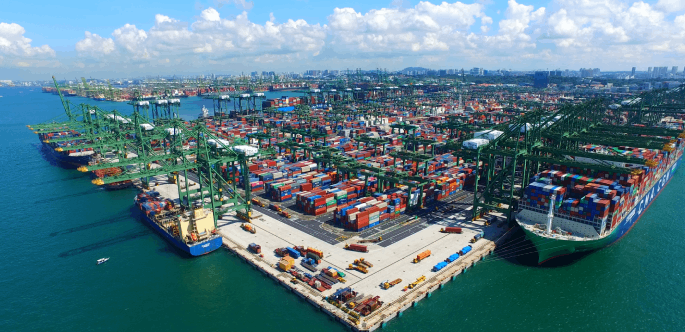

The Port of Singapore is the leading global transshipment hub, strategically located on major East–West shipping routes. It connects Asia, Europe, Africa, and the Americas with unmatched efficiency.
Key strengths
- World-class port efficiency
- Over 600 global port connections
- Major hub for fuel bunkering and logistics services
🚢 3. Port of Ningbo-Zhoushan – China
Port of Ningbo-Zhoushan
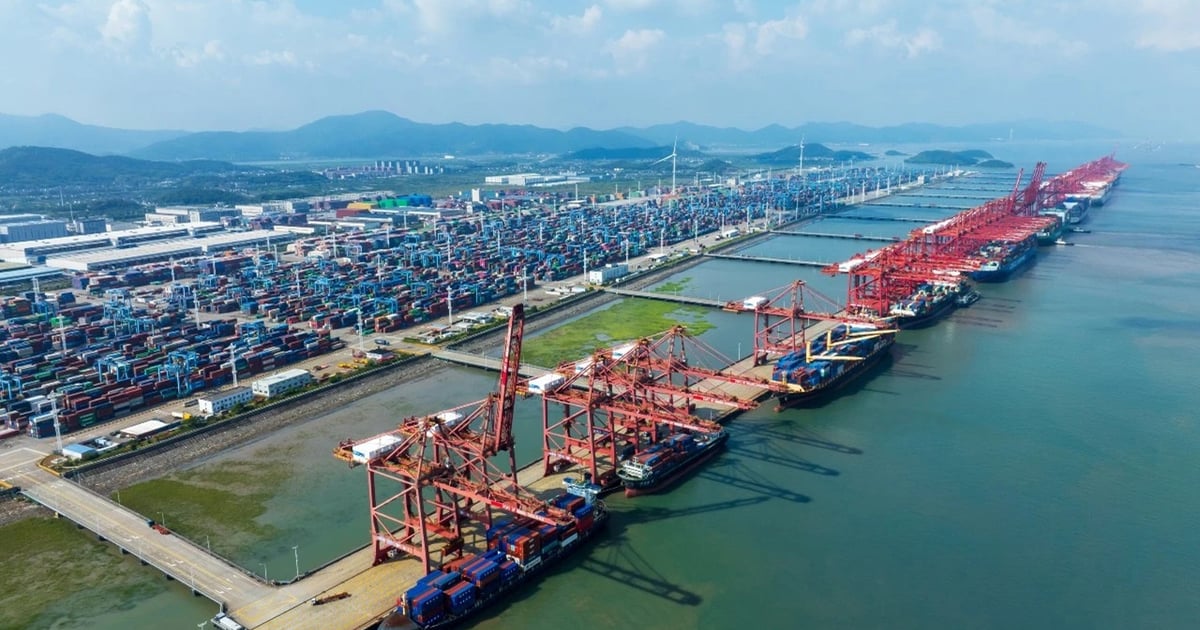

This port is the world’s largest in total cargo tonnage, handling huge volumes of iron ore, coal, crude oil, and containers. It plays a crucial role in China’s commodity imports and exports.
Key strengths
- Largest bulk cargo port globally
- Deep-water berths for large vessels
- Integrated sea–river transport system
🚢 4. Port of Shenzhen – China
Port of Shenzhen

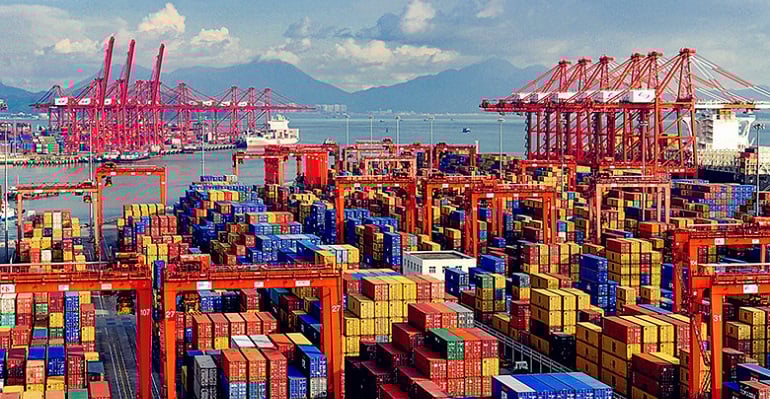
Serving China’s manufacturing powerhouse Guangdong province, the Port of Shenzhen is a major export hub for electronics, IT products, machinery, and consumer goods.
Key strengths
- Close to Hong Kong & Pearl River Delta
- High container traffic
- Strong export-driven industrial base
🚢 5. Port of Rotterdam – Netherlands
Port of Rotterdam

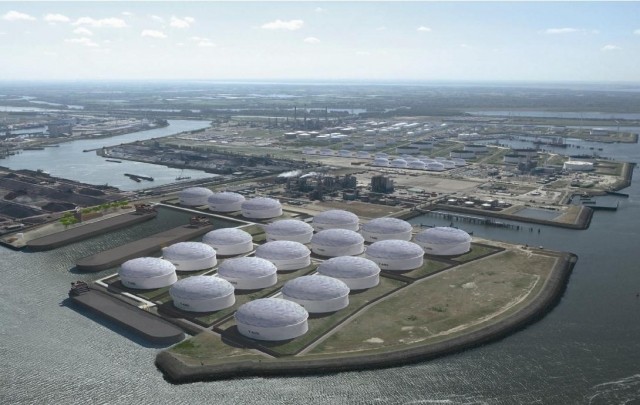
The Port of Rotterdam is Europe’s largest seaport and a key gateway to the EU market. It handles containers, liquid bulk, chemicals, and energy cargo for Europe.
Key strengths
- Advanced digital & green port initiatives
- Excellent inland waterway and rail links
- Major hub for oil, LNG, and chemicals
🚢 6. Port of Busan – South Korea
Port of Busan
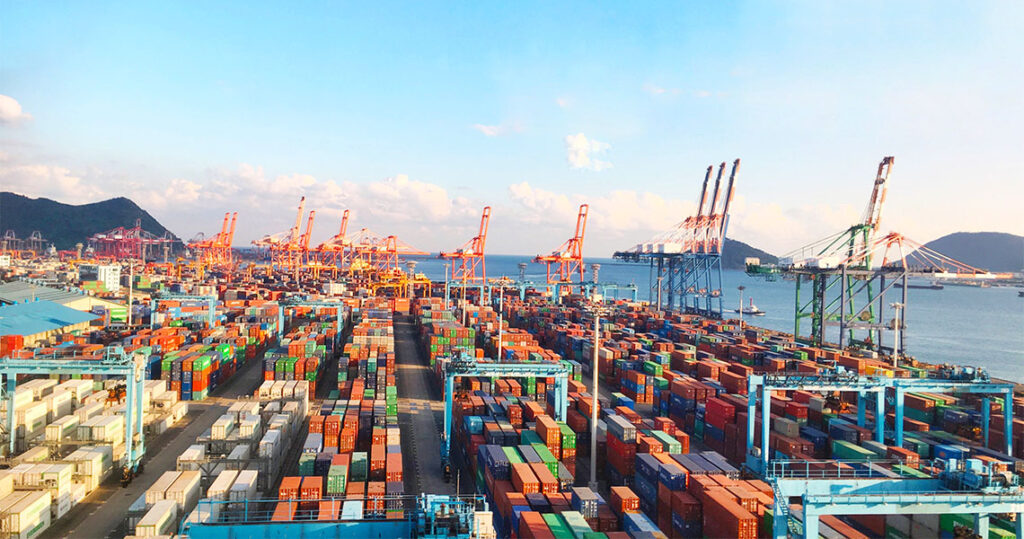
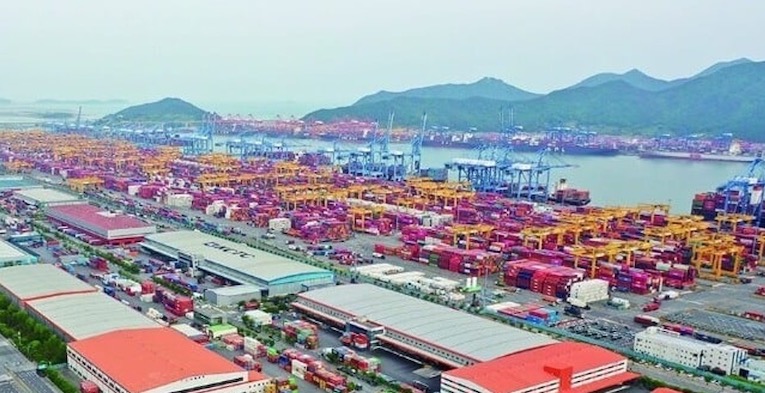
Busan is Northeast Asia’s leading transshipment hub, supporting South Korea’s exports of automobiles, electronics, steel, and machinery.
Key strengths
- Fast turnaround time
- Strong transshipment network
- Gateway to Japan, China & Russia
🚢 7. Port of Jebel Ali (Dubai) – UAE
Jebel Ali Port


Jebel Ali is the largest seaport in the Middle East, acting as a bridge between Asia, Europe, and Africa. It is also a global re-export and free-zone hub.
Key strengths
- Integrated with JAFZA Free Zone
- Major hub for automotive & project cargo
- Excellent multimodal connectivity
🚢 8. Port of Los Angeles – USA
Port of Los Angeles
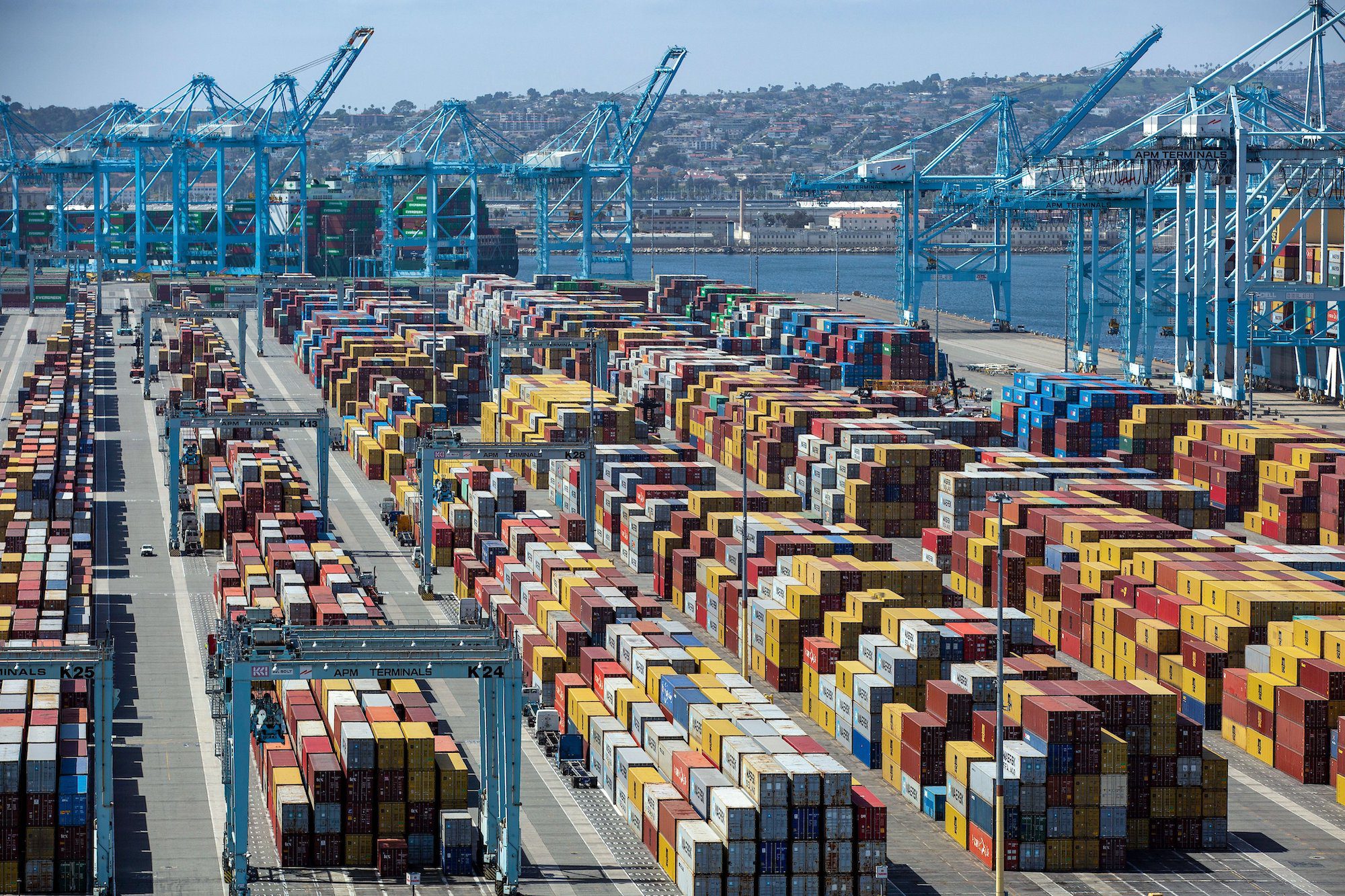
Known as “America’s Port,” the Port of Los Angeles is the largest container port in the United States, handling massive trade volumes with Asia.
Key strengths
- Primary US–Asia trade gateway
- Strong customs and logistics infrastructure
- High-value consumer goods imports
🚢 9. Port of Hamburg – Germany
Port of Hamburg


The Port of Hamburg is Germany’s main international port, connecting Europe with Asia and the Americas, especially for machinery, chemicals, and industrial cargo.
Key strengths
- Strong rail connectivity across Europe
- Leading port for Central & Eastern Europe
- Major container and project cargo hub
🚢 10. Port of Antwerp-Bruges – Belgium
Port of Antwerp-Bruges
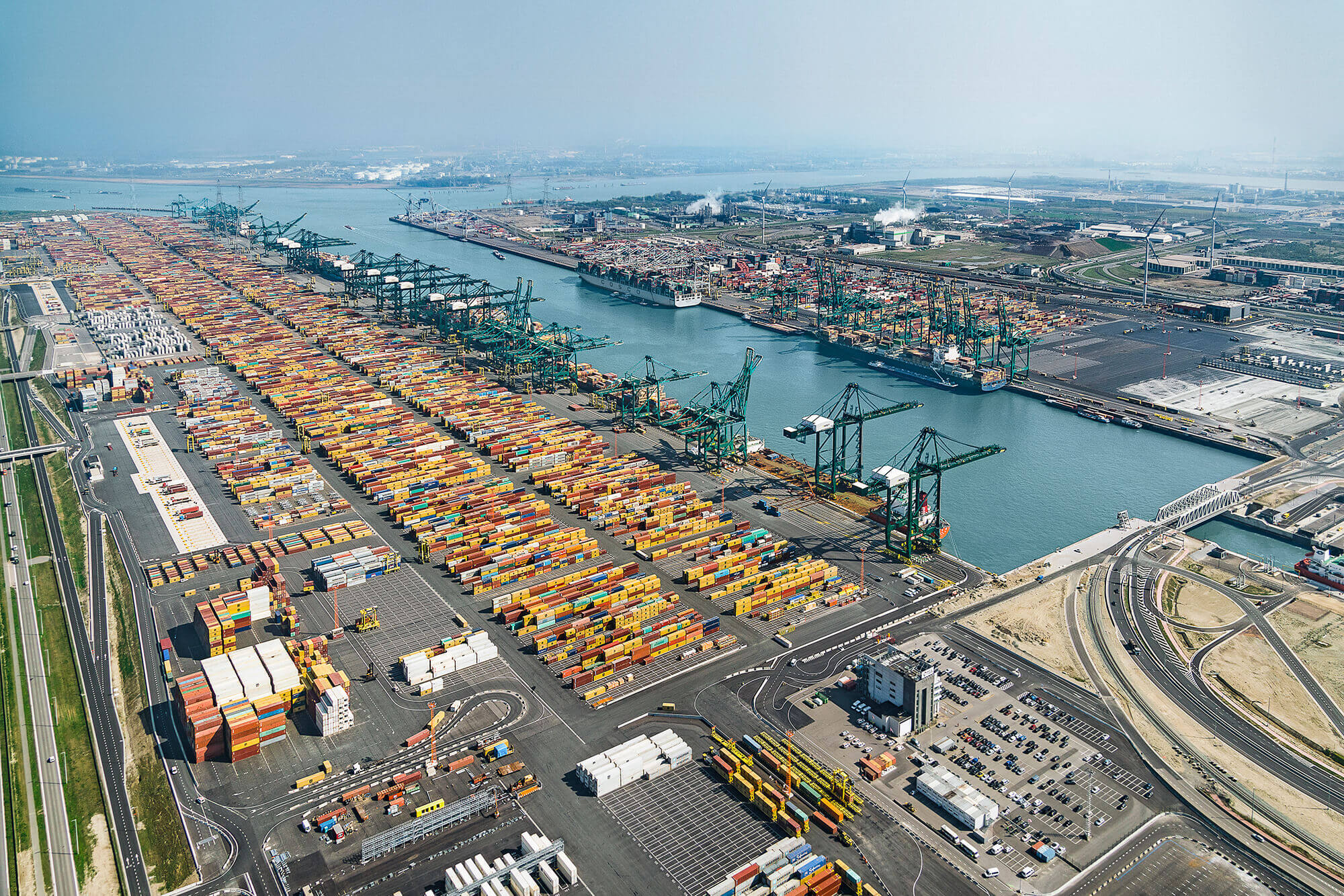
One of Europe’s most important ports, Antwerp-Bruges is a global center for petrochemicals, containers, breakbulk, and project cargo.
Key strengths
- World-class chemical cluster
- High-value cargo handling
- Strong hinterland connectivity
📦 Why These Sea Ports Matter for Exporters & Importers
- ✅ Faster cargo movement and reduced logistics cost
- ✅ Access to global shipping routes
- ✅ Specialized handling for containers, bulk & project cargo
- ✅ Reliable customs and trade infrastructure
For exporters, importers, and international trade professionals, choosing the right sea port directly impacts cost efficiency, delivery timelines, and global competitiveness.