
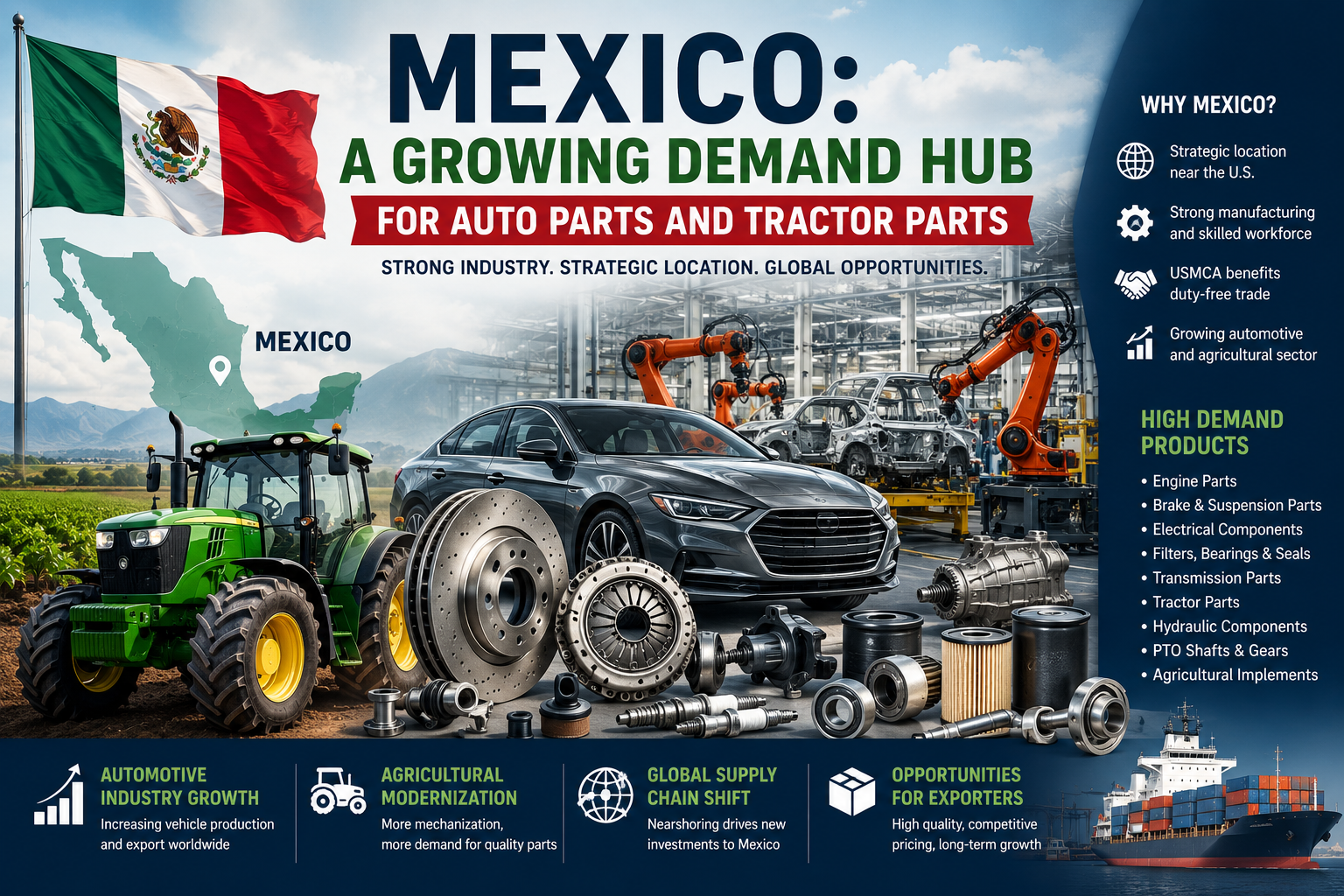
Mexico: A Growing Demand Hub for Auto Parts and Tractor Parts
Mexico has emerged as one of the most important manufacturing and automotive hubs in the world. In 2026, the country is witnessing rapidly increasing demand for auto parts, tractor parts, industrial components, and agricultural machinery products due to expanding automotive production, infrastructure growth, agricultural modernization, and strong export integration with the United States and Canada.
The combination of industrial expansion, nearshoring trends, and the strengthening of North American supply chains is creating major business opportunities for global manufacturers and exporters of automotive and tractor components.
Mexico’s Strategic Importance in the Global Automotive Industry
Mexico is among the world’s leading vehicle manufacturing countries and plays a critical role in the North American automotive supply chain. The country exports millions of vehicles, engines, and auto components every year, mainly to the United States and Canada under the USMCA trade framework.
Global automobile manufacturers continue expanding their operations in Mexico because of:
- Competitive manufacturing costs
- Skilled labor availability
- Strong logistics connectivity
- Access to the US market
- Free trade agreements with multiple countries
Mexico’s diversified manufacturing base and open trade policy continue attracting international investments into automotive and industrial sectors.
Rising Demand for Auto Parts in Mexico
The Mexican automotive industry is creating continuous demand for imported and locally sourced auto components. As vehicle production increases, manufacturers and aftermarket distributors require high-quality automotive parts for passenger cars, commercial vehicles, electric vehicles, and industrial transport systems.
High-Demand Auto Parts in 2026
- Engine components
- Suspension parts
- Brake systems
- Filters
- Bearings
- Clutch plates
- Transmission components
- Rubber parts
- Forged components
- Electrical auto parts
- EV-related components
- Industrial fasteners
- Sheet metal components
Mexico is also benefiting from supply chain diversification as global companies seek alternatives to Asian sourcing. This shift is increasing demand for reliable international suppliers of engineering goods and automotive components.
Recent trade discussions between Mexico and the United States regarding automobiles, steel, and machinery highlight the importance of the automotive sector in Mexico’s economy.
Growing Tractor Parts Market in Mexico
Agriculture remains an important sector in Mexico’s economy. With increasing agricultural mechanization and modernization, the demand for tractors and tractor spare parts is growing significantly.
Mexican farmers are investing in:
- Modern tractors
- Irrigation systems
- Harvesting equipment
- Precision farming technology
- Agricultural machinery maintenance
This transformation is creating strong import demand for tractor and farm equipment components.
High-Demand Tractor Parts
- Tractor engine parts
- Hydraulic systems
- PTO shafts
- Tractor tyres
- Bearings and seals
- Gear components
- Clutch systems
- Agricultural implements
- Fuel injection systems
- Filters and lubricants
International suppliers offering durable and cost-effective tractor components can find strong market opportunities in Mexico’s agricultural sector.
Nearshoring Driving New Industrial Demand
One of the biggest economic trends benefiting Mexico is “nearshoring.” Many global manufacturers are relocating production closer to the United States market to reduce logistics costs and improve supply chain resilience.
As a result, Mexico is seeing increased investment in:
- Automotive assembly plants
- Industrial parks
- Warehousing
- Engineering manufacturing
- Logistics infrastructure
This industrial growth is generating additional demand for:
- Industrial machinery
- Engineering goods
- Material handling systems
- Construction equipment
- Industrial spare parts
Mexico’s large manufacturing workforce and geographic advantage make it a preferred destination for global industrial expansion.
Electric Vehicles Creating New Opportunities
The global transition toward electric vehicles is also reshaping Mexico’s automotive market. Demand is increasing for:
- EV batteries
- Charging systems
- Lightweight auto components
- Electronic control systems
- Smart sensors
- Green manufacturing technologies
Research published in 2026 highlights rising demand for green automotive skills and sustainable automotive technologies within Mexico’s automotive sector.
This creates opportunities for exporters involved in:
- EV component manufacturing
- Electronics
- Automation
- Industrial software
- Renewable energy integration
Opportunities for Indian Exporters
Indian manufacturers and exporters have strong potential in Mexico due to:
- Competitive pricing
- Engineering expertise
- Quality manufacturing capabilities
- Growing global trade connectivity
Potential Export Products from India
- Auto spare parts
- Tractor parts
- Forged components
- Castings
- Industrial machinery
- Agricultural equipment
- Rubber products
- Fasteners
- Hydraulic components
Indian SMEs and engineering exporters can especially benefit from Mexico’s expanding industrial and agricultural markets.
Challenges to Understand
While Mexico offers significant opportunities, exporters should also consider:
- USMCA compliance requirements
- Quality certifications
- Competition from China
- Logistics and customs regulations
- Currency fluctuations
At the same time, Mexico’s integration with North American manufacturing continues to make it one of the strongest long-term markets for automotive and industrial suppliers.
Conclusion
Mexico is rapidly becoming a high-growth destination for auto parts and tractor parts suppliers worldwide. Expanding automotive production, agricultural modernization, industrial nearshoring, and electric vehicle development are all contributing to rising demand.
For global exporters, manufacturers, and international business consultants, Mexico represents a strategic gateway into the North American industrial economy.